Milan's public transport is run by ATM and it's efficient, cheap and easy to use. The historic centre is compact enough to walk, but the metro is the fastest way to cross town, and a single ticket covers the metro, trams and buses across the urban area.
The Milan metro is the longest network in Italy, with five colour-coded lines. Find out about the routes, travel cards and prices.
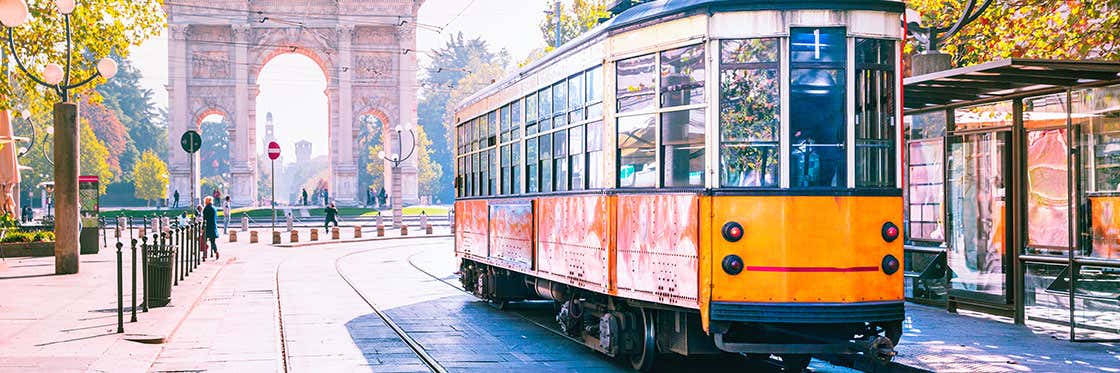
Read moreMilan's vintage orange trams run past midnight every day. Find the routes, prices, tickets and schedules of the city's tram lines.
Read moreMilan has over 80 local bus lines plus night buses. Find information on the routes, timetables and prices of buses across the city.
Read moreThe hop-on hop-off sightseeing bus loops past Milan's main attractions, so you can see the city at your own pace.
Read moreYou never know when you'll need a cab. Find how Milan's white taxis work, the tariffs, and the best apps to book one.
Read moreThe different ATM tickets and travel cards for getting around Milan — and how to pick the best value for your stay.
Read moreIf you're staying in Milan's historic centre for 2–3 days and getting around mostly on foot, a handful of single tickets (€2.20 each) will be enough. The 24-hour pass (€7.60) is worth it only if you plan to use the metro 4+ times in a day — for instance, an airport round trip plus visiting outlying attractions.
Do tourists need to use public transport?
If you're staying in the historic centre — the area around the Duomo, Brera, Castello Sforzesco and Navigli — most major attractions are within comfortable walking distance, and you may only need the metro to reach the airports or distant neighbourhoods. The metro becomes essential for: Linate Airport (M4 from San Babila), the Malpensa Express (from Cadorna/Centrale), the Navigli district (M2 Porta Genova), the San Siro stadium (M5), and trips to outlying areas.
Loop past the Duomo, the castle and the main sights with an open-top bus and audio guide.