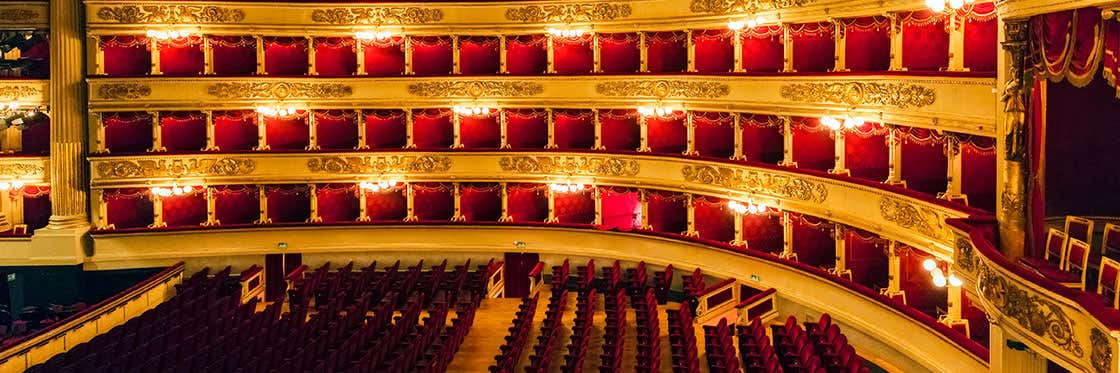
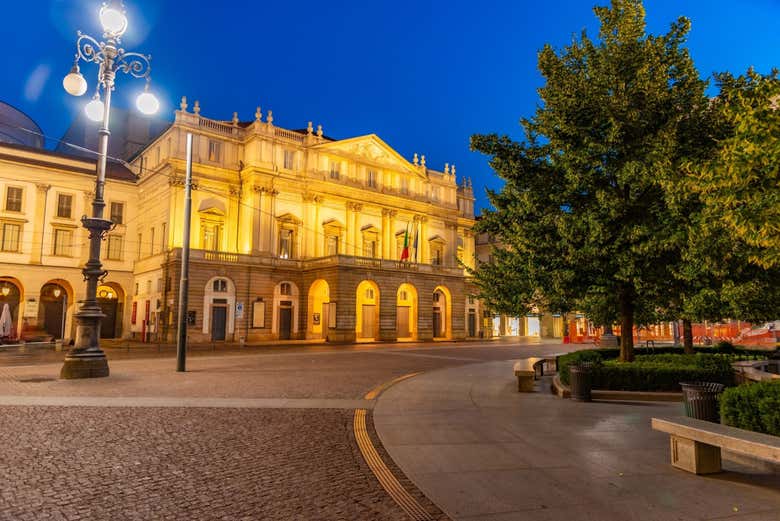
The Teatro alla Scala — known the world over simply as La Scala — is arguably the most famous opera house on earth. Opened in 1778 behind a restrained neoclassical façade, its gilded, horseshoe-shaped auditorium has witnessed the premieres of some of the greatest works in the repertoire and launched the careers of the singers, conductors and composers who defined Italian opera.
Designed by Giuseppe Piermarini and built on the site of the church of Santa Maria alla Scala — from which it takes its name — the theatre remains a working opera house at the heart of Milanese life. Even if you don't catch a performance, its museum lets you step inside, admire the auditorium and trace two and a half centuries of musical history.
A short history
La Scala was built after a fire destroyed the city's previous royal theatre, and opened in 1778 with an opera by Antonio Salieri. Through the 19th century it became the crucible of Italian opera, giving the world premieres of Verdi masterpieces such as Nabucco, Otello and Falstaff, and later Puccini's Madama Butterfly and the posthumous Turandot.
The auditorium was gutted by Allied bombing in 1943 and rebuilt to reopen in 1946 with a legendary concert conducted by Arturo Toscanini. A careful three-year restoration completed in 2004 modernised the stage and backstage while faithfully preserving the historic hall.
What to see & do
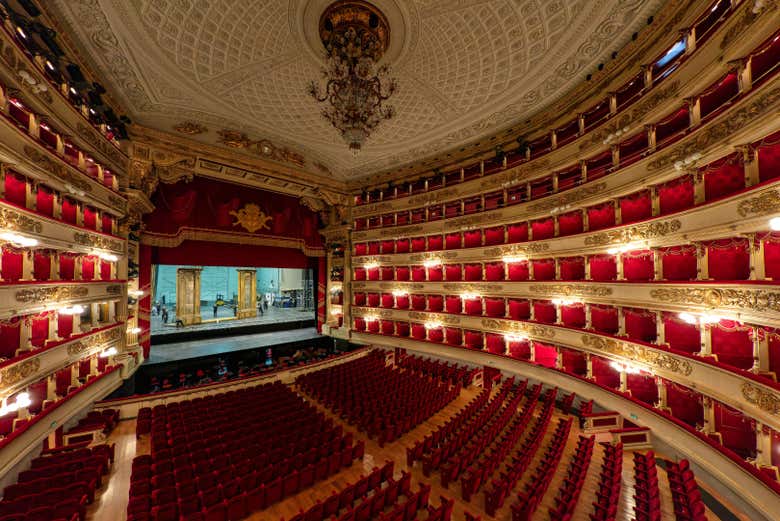
The gilded, horseshoe-shaped hall rising over six tiers of boxes to the gallery — a masterpiece of theatrical acoustics and one of the great rooms of Europe.
This is the stage that gave the world Nabucco, Otello, Falstaff, Madama Butterfly and Turandot. Few theatres carry so much operatic history.
Portraits, instruments, costumes and mementos of great composers and singers fill the Museo Teatrale alla Scala, with a view into the auditorium.
Catching a performance is the ultimate experience — from grand new productions to symphonic concerts and ballet across the season.
Skip the queue for the theatre museum, or join a guided visit that tells the stories behind the world's most famous stage.
Same-day gallery tickets. A limited number of cheap seats in the highest gallery go on sale at the box office on the day of each performance. Turn up early, and you can hear world-class opera for the price of a museum ticket.
A pleasant visit
The museum tour is worthwhile precisely because it lets you into parts of La Scala that are otherwise off-limits — above all the red-satin boxes that look straight onto the auditorium. There are really only two ways inside the theatre: a ticket to an opera or ballet, or the museum.
If you can't get a performance seat, the museum is the next best thing, and on days without a rehearsal it still gives you a look into the hall itself. Set aside about an hour for the visit.
Getting there & hours
La Scala stands in Piazza della Scala, a two-minute walk from the Duomo through the Galleria. The theatre museum is open daily and includes a peek into the auditorium when no rehearsal is on; performance tickets are booked separately.