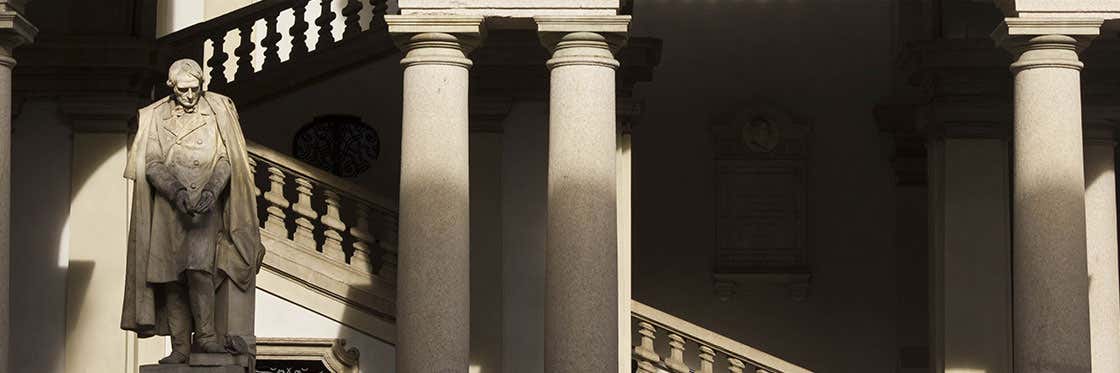
The Pinacoteca di Brera is considered one of the finest art galleries in Italy — a museum of extraordinary depth, housed in a magnificent 17th-century palazzo in the heart of Milan's most elegant neighbourhood. Its 38 halls hold masterpieces by Raphael, Caravaggio, Tintoretto, Mantegna and Piero della Francesca.
Skip the queue and let an expert bring all 38 rooms to life — ticket included.
History
The Palazzo Brera was built during the 16th and 17th centuries, originally as a church and monastery for the Humiliati order. When the order was suppressed, the building became a Jesuit college, housing a library and an astronomical observatory.
In 1773 the Jesuits were suppressed in turn, and Archduchess Maria Theresa of Austria opened an Accademia di Belle Arti in the palazzo. In 1882 the Pinacoteca became independent from the Academy, and its collection has grown every year since — enriched, in part, by works Napoleon confiscated from churches across northern Italy.
The masterpieces
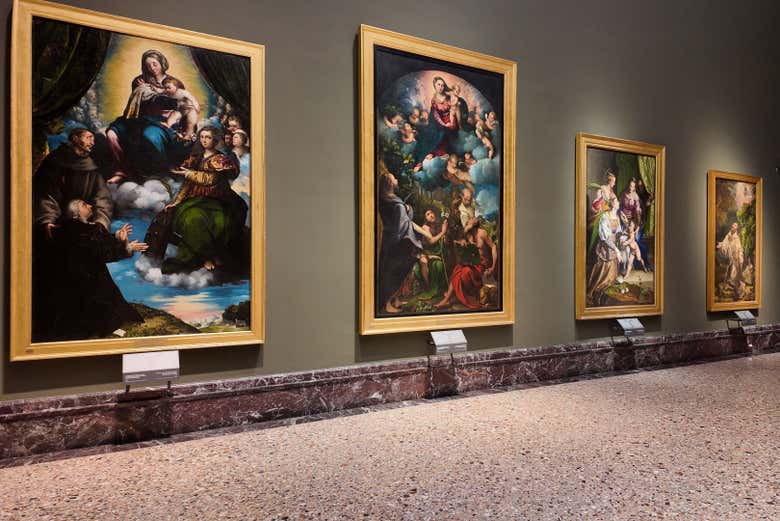
The paintings are arranged chronologically through 38 rooms, grouped by artistic school — overwhelmingly Italian and predominantly religious, which makes Brera exceptional for anyone drawn to the Renaissance and Baroque.
Painted in 1504 when Raphael was just 21 — an entire architectural world of the High Renaissance in a single panel.
The most studied painting in Brera; its radical foreshortening of Christ's body has been analysed for centuries.
A dramatic, spatially complex masterpiece of Venetian Mannerism — one of the great narrative paintings of the 1500s.
Painted in 1859 and the most reproduced Italian Romantic painting in history — read as a symbol of the Risorgimento.
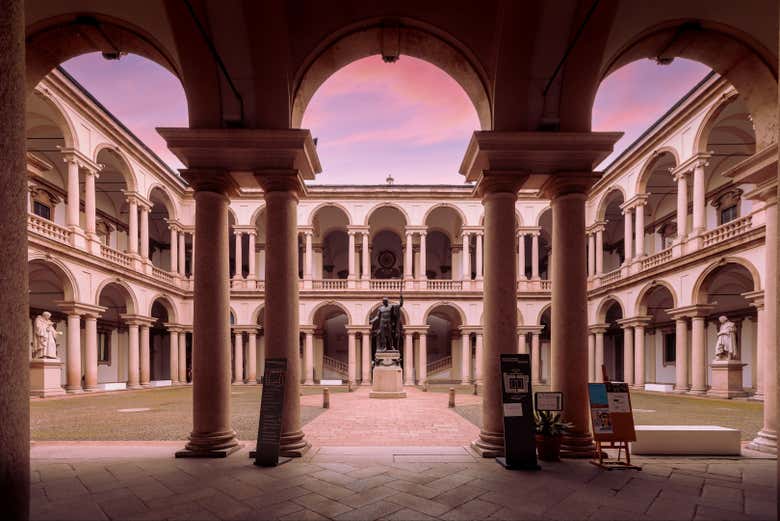
The courtyard is free. The porticoed courtyard of Palazzo Brera — with Canova's bronze statue of Napoleon at its centre — can be visited without a museum ticket. Worth a look even if you skip the gallery.
Classic Italian Paintings
Although the Pinacoteca di Brera is considered one of the finest galleries in Milan and Italy, most of the collection is religious art, so it won't be to everyone's taste. The entrance fee is also fairly high — if you're not a keen art lover, it may not be worth the visit.
Visiting tips
The collection is mostly religious art from the 13th–19th centuries. Go with the right expectations and it is extraordinary; for secular or modern art, try the Poldi Pezzoli or the Triennale.
The guided tour is strongly recommended — many works reward context.
Look for the Mantegna Lamentation and Raphael's Marriage of the Virgin on the floor map at the entrance; they sit in separate rooms.