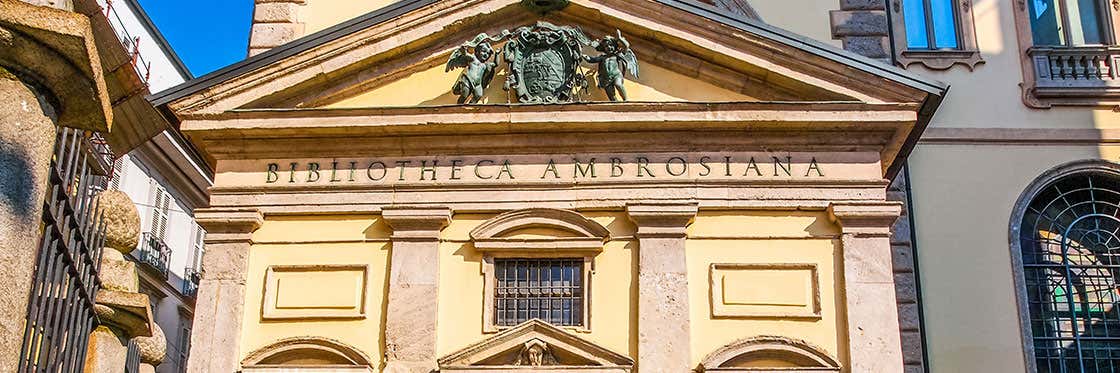
The Pinacoteca Ambrosiana is one of the finest art museums in Milan — and one of the least crowded. Founded in 1618 by Cardinal Federico Borromeo, it holds masterpieces by Leonardo da Vinci, Caravaggio, Botticelli and Titian, and is home to the largest collection of Leonardo's Codex Atlanticus in the world.
About the museum
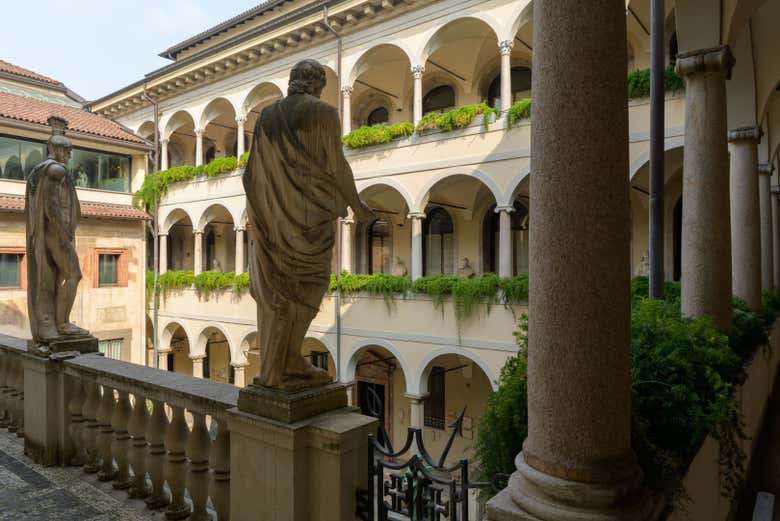
Cardinal Federico Borromeo created the Ambrosiana to inspire future artists, founding alongside it the Biblioteca Ambrosiana — the second public library to open in Europe — and an academy of fine arts. The gallery is housed in a handsome palazzo attached to the Church of the Holy Sepulchre, a short walk from the cathedral.
It remains one of the city's most rewarding cultural visits precisely because it is rarely busy: you can stand in front of a Leonardo or a Caravaggio with room to breathe.
The four masterpieces
Beyond its depth, the collection is famous for four works that alone justify the visit.
The only known Leonardo portrait of a male subject — unfinished, luminous, and endlessly studied.
Widely considered the first true still life in Western art, painted around 1599.
A tender, circular Madonna and Child flanked by angels — quintessential Florentine grace.
A richly coloured Venetian nativity from the height of Titian's powers.
The Codex Atlanticus
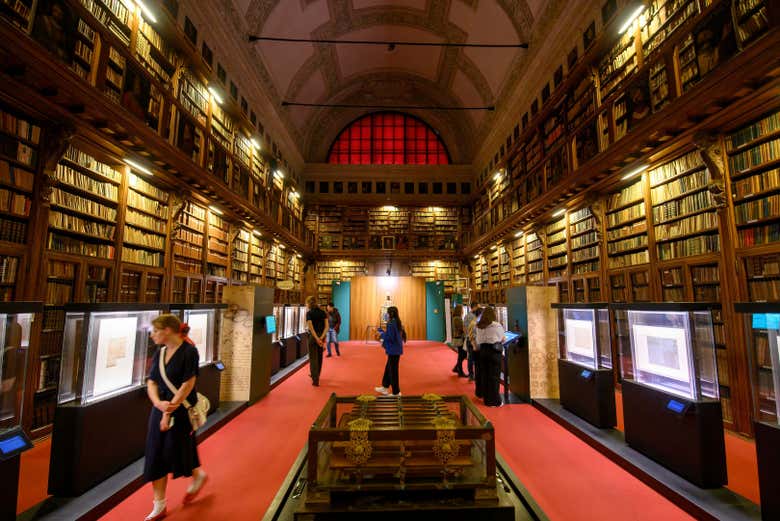
Housed in the Biblioteca Ambrosiana, the Codex Atlanticus is the largest single collection of Leonardo da Vinci's drawings and writings in existence — over 1,000 pages spanning flying machines, weapons, musical instruments, mathematics and botany. A rotating selection is displayed to protect the fragile originals.
Note: a small part of the Codex is also shown in the Bramante Sacristy at Santa Maria delle Grazie (by the Last Supper) — but if you visit the Ambrosiana you needn't see both.
One of the best museums in Milan
The Pinacoteca Ambrosiana is a genuinely rewarding visit, not only for its paintings but for the remarkable palazzo that houses them, attached to the Church of the Holy Sepulchre. The library is one of its most special corners — the scent of wood and old books transports you to another age, above all when you stand before Leonardo's sketches.
A small part of the Codex Atlanticus is also displayed in the Bramante Sacristy at Santa Maria delle Grazie; if you've already seen it here, there's no real need to visit the Sacristy as well.
Visiting tips
It's rarely crowded — a calm alternative to the Duomo queues nearby.
Booking ahead is worth it in high season.
Combine it easily with the Duomo, the Galleria and Piazza Mercanti, all within a few minutes' walk.
Closed on Wednesdays — plan around it.
Pair the Ambrosiana with a guided walk through the historic centre.